It's been waaaaay to long since I last posted. Between a ridiculous amount of travelling for work and a ridiculous amount of hours spent caring for the new puppy, I've really let my blogging slip. That being said, I came across a great story that really puts our fast-paced, driven society in perspective. I'm not sure where this story originated, but I came across it in a new book from Relevant called 'Perspectives' by Colin Creel:
The American investment banker was at the pier of a small coastal Mexican village when a small boat with just one fisherman docked. Inside the small boat were several large-fin tuna. The American complimented the Mexican on the quality of his fish and asked how long in took to catch them. The Mexican replied, only a little while. The American then asked why he didn't stay out longer and catch more fish. The Mexican said he had enough to support his family's immediate needs. So the American asked, "But what do you do with the rest of your time?" The Mexican fisherman said, "I sleep late, fish a little, play with my children, take siesta with my wife, stroll into the village each evening where I sip wine and play guitar with my amigos. I have a full and busy life."
The American scoffed, "I am a Harvard MBA and could help you. You should spend more time fishing and with the proceeds, but a bigger boat. With the proceeds from the bigger boat, you could buy several boats. Eventually you would have a fleet of fishing boats. Instead of selling your catch to a middleman, you would sell directly to the processor, eventually opening your own cannery. You would control the product, processing, and distribution. You would need to leave this small village and move to Mexico City, then to Los Angeles and eventually to New York City where you would run your expanding enterprise."
The Mexican fisherman asked, "But, how long will all of this take?" To which the American replied, "Fifteen to twenty years."
"But what then?" the fisherman asked.
The American laughed and said, "That's the best part! When the time is right, you would announce and IPO and sell your company stock to the public and become very rich. You would make millions!"
"Millions...then what?" was the reply.
The American said, "Then you would retire. Move to a small coastal fishing village where you would sleep late, fish a little, play with your kids, take siesta with your wife, stroll to the village in the evenings where you could sip wine and play guitar with your amigos."
Hmmm...seems to me the fisherman in this story is the one with the right priorities. Maybe I need to take up fishing...
Thursday, June 16, 2005

Monday, May 23, 2005

Welcome home!

Well, it took longer than a human birth, but we finally took the plunge on Saturday and got ourselves a new little friend and we're already in love with her (click on any of the pictures below to get an expanded view.) May I present...Havana!
She's a Havanese which is a Cuban breed related to the Bichon-Friese family. She'll grow to about 9 pounds which is perfect for us. We didn't get Havana from this breeder but they do have a good website if you want to learn about the Havanese.
Tuesday, May 03, 2005
Book Review: The Last Disciple
Truth be told, I'm not a big fan of Christian fiction for various reasons - not much character development, too many easy answers, stunted dialogue - and I'm also not a big fan of historical fiction which makes it even more surprising that I enjoyed The Last Disciple by Hank Hanegraaff and Sigmund Brouwer so much. Well written and researched, this novel has various different storylines happening at once as we follow the lives of believers and non-believers alike in Nero's empire. In case you aren't aware, this is the 'anti-Left Behind' book that has caused so much controversy in the U.S. While LaHaye & Jenkins present a view of the end times based on dispensationalism in Left Behind, Hanegraaff & Brouwer are presenting a modified pretarism which Hanegraaff is calling Exegetical Eschatology.
In a nutshell, Left Behind says Biblical prophesy from the book of Revelation is all yet to come – the rapture, the antichrist, the great tribulation, and finally the return of Jesus. Modified pretarism (or partial pretarism) would say that most of the apocalyptic events of Revelation have already taken place at the destruction of Jerusalem and the Temple in 70 AD by Nero (which is what The Last Disciple series is all about) but we still have the second-coming of Jesus to look forward to. I won’t get into the historicity of each of these views here because this is supposed to be a book review, not an eschatology class.
Theology aside, The Last Disciple is a good read and even if you could care less about the dispensationalism vs. pretarism controversy, I think you’ll find this is an exciting page turner. Check out the Last Disciple website for more details. YYYY
In a nutshell, Left Behind says Biblical prophesy from the book of Revelation is all yet to come – the rapture, the antichrist, the great tribulation, and finally the return of Jesus. Modified pretarism (or partial pretarism) would say that most of the apocalyptic events of Revelation have already taken place at the destruction of Jerusalem and the Temple in 70 AD by Nero (which is what The Last Disciple series is all about) but we still have the second-coming of Jesus to look forward to. I won’t get into the historicity of each of these views here because this is supposed to be a book review, not an eschatology class.
Theology aside, The Last Disciple is a good read and even if you could care less about the dispensationalism vs. pretarism controversy, I think you’ll find this is an exciting page turner. Check out the Last Disciple website for more details. YYYY
Sunday, April 17, 2005
Caring for the Environment
Our lead pastor spoke today about the environment and how those of us who call ourselves Christians should be far more convicted about caring for the environment than we are. It was a very personal message in that he, himself is just starting to wake up the waste and mismanagement of the world's resources in his own life. I try to do my part at home and at work but it isn’t too hard to bring home a bag of pop cans or scrap paper to drop in the recycle bin. It is far more difficult for me to consider the amount of water I waste in a long, hot shower in the morning or the extra fossil fuel we’ll be burning and greenhouse gasses we’ll be emitting if we get a second car. With Earth Day (or as some prefer to call it Creation Day) coming up this Friday, take a look at your own life for ways to decrease your consumption of resources and how you can give back to the world that God has given us to look after. I’ll be doing just that this week and will hopefully have some tips next Sunday after this topic is explored further in the adult forum at church.
I’ve copied the info below from Calvin DeWitt from one of many websites on Christian environmentalism. Go check it out!
The Seven Degradations of the Earth
Calvin DeWitt, in his book The Environment and the Christian, lists seven degradations of the earth.
First, land is being converted from wilderness to agricultural use and from agricultural use to urban areas at an ever-increasing rate. Some of these lands cannot be reclaimed at all, at least not in the near future.
Second, as many as three species a day become extinct. Once a species has disappeared, it is gone. Neither the species nor the role it occupied in the ecosystem can be retrieved.
Third, land continues to be degraded by the use of pesticides, herbicides, and fertilizers. Just because DDT is no longer used does not mean that potentially harmful chemicals are not being used in its place.
Fourth, the treatment of hazardous chemicals and wastes continues as an unsolved problem. Hazardous chemicals seep into water sources from previously buried dumping grounds.
Fifth, pollution is rapidly becoming a global problem. Human garbage turns up on the shores of uninhabited South Pacific islands, far from the shipping lanes, and DDT has been found in Antarctic penguins.
Sixth, our atmosphere appears to be changing. Is it warming due to the increase of gases like carbon dioxide from the burning of fossil fuels? Is the ozone layer shrinking due to the use of chemicals contained in refrigerators, air conditioners, spray cans, and fire extinguishers? Though these questions cannot be answered easily, they must be asked.
Seventh, we are losing the experiences of cultures that have lived in harmony with the creation for hundreds or even thousands years. Cultures such as the Mennonites and Amish, as well as those of the rain forests, are crowded out by the expansion of civilization.
Never before have human beings wielded so much power over God's creation. Do we know what we are doing?
I’ve copied the info below from Calvin DeWitt from one of many websites on Christian environmentalism. Go check it out!
The Seven Degradations of the Earth
Calvin DeWitt, in his book The Environment and the Christian, lists seven degradations of the earth.
First, land is being converted from wilderness to agricultural use and from agricultural use to urban areas at an ever-increasing rate. Some of these lands cannot be reclaimed at all, at least not in the near future.
Second, as many as three species a day become extinct. Once a species has disappeared, it is gone. Neither the species nor the role it occupied in the ecosystem can be retrieved.
Third, land continues to be degraded by the use of pesticides, herbicides, and fertilizers. Just because DDT is no longer used does not mean that potentially harmful chemicals are not being used in its place.
Fourth, the treatment of hazardous chemicals and wastes continues as an unsolved problem. Hazardous chemicals seep into water sources from previously buried dumping grounds.
Fifth, pollution is rapidly becoming a global problem. Human garbage turns up on the shores of uninhabited South Pacific islands, far from the shipping lanes, and DDT has been found in Antarctic penguins.
Sixth, our atmosphere appears to be changing. Is it warming due to the increase of gases like carbon dioxide from the burning of fossil fuels? Is the ozone layer shrinking due to the use of chemicals contained in refrigerators, air conditioners, spray cans, and fire extinguishers? Though these questions cannot be answered easily, they must be asked.
Seventh, we are losing the experiences of cultures that have lived in harmony with the creation for hundreds or even thousands years. Cultures such as the Mennonites and Amish, as well as those of the rain forests, are crowded out by the expansion of civilization.
Never before have human beings wielded so much power over God's creation. Do we know what we are doing?
Sunday, March 27, 2005
Friday, March 25, 2005
Thursday, March 24, 2005

Wednesday, March 23, 2005
Pupdate
The search for a puppy continues as we haven't been able to find one yet. We're looking for a Havanese but they're somewhat rare so there aren't many breeders to choose from. And, it seems that most breeders wait until spring before they let their dogs stud. Don't you love that phrase? I can just picture all these male dogs eagerly marking the days off their calendars waiting for their day to get busy!
Tuesday, March 22, 2005
Am I An Evangelical?
Back in January I said I was going to write about a few topics, one of which was my struggle with evangelicalism. What does it mean to be an evangelical and am I still one? Aside from all of the coverage in the media in the wake of George W’s re-election, it was a personal incident that first raised the question. Let me ‘splain…
My wife was on reception at our church when she received a call inquiring if our church was evangelical. She assumed the answer would be yes, but went to check with one of the pastoral staff just to make sure. It turns out that no; the Mennonite Brethren Church does not consider itself evangelical because it grew out of the Anabaptist tradition. Even though all of our core beliefs and practices are the same as any evangelical tradition, I suddenly found myself NOT attending an evangelical church. On one hand, I thought about all of the people who would be concerned about my eternal salvation. On the other hand I thought, “Hmm…cool.”
Since that time I’ve done a lot of thinking and even some praying over what it means to be an evangelical and does it even matter, especially when that term has been hijacked by right-wing power brokers in the U.S. and misused by uninformed media types in Canada. In addition to my own thinking, I’ve been reading a lot about postmodernism and what the postmodern church will look like (notice my two latest books read on the sidebar) which has influenced my thinking too. We’ve had some great discussions at work as well about postmodernism and the “emerging church” that is such a hot topic in some circles. My conclusions, of which there are many, can be summarized in a few points:
1) Terms like Evangelical, Baptist, Pentecostal, Lutheran, Catholic, Missionary, Free Methodist, Mennonite Brethren, etc. that we use as identifiers to segregate ourselves from mainstream society and from other believers are becoming less and less relevant as we head into the postmodern era. As Christians, we spent a good portion of the last 100 years removing ourselves from the populace around us. We’ve been so successful that we are now on the same level as sideshow freaks or ancient pottery in a museum. The Christian subculture we’ve created may be safe but it sure doesn’t help us accomplish our mission of being the hands and feet of Christ in the world.
2) We have been so concerned with having correct doctrine, theology, and practices that we have forgotten the importance of being in right relationship with God, with friends and neighbours, and with the world at large. In the words of Paul the apostle, “I count myself the chief of sinners” in this area. I know that I’ve hurt people and made some harsh comments because I put correct doctrine ahead of loving relationship. Jesus built loving relationships with everyone, regardless of their worldview, with one exception…the Pharisees…the religious leaders who were more concerned with proper practice than with the heart.
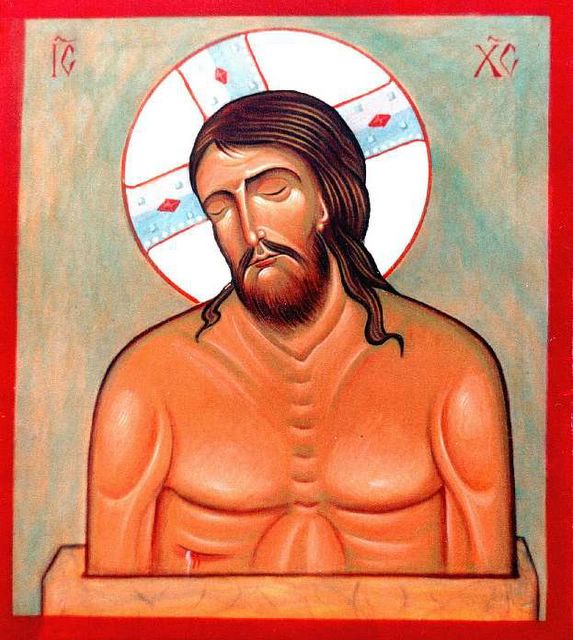
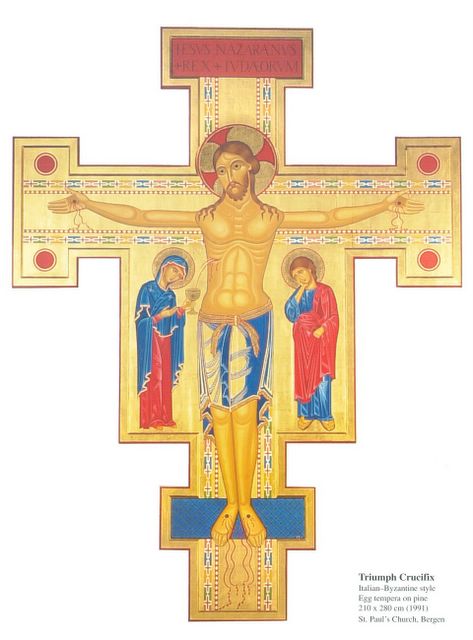
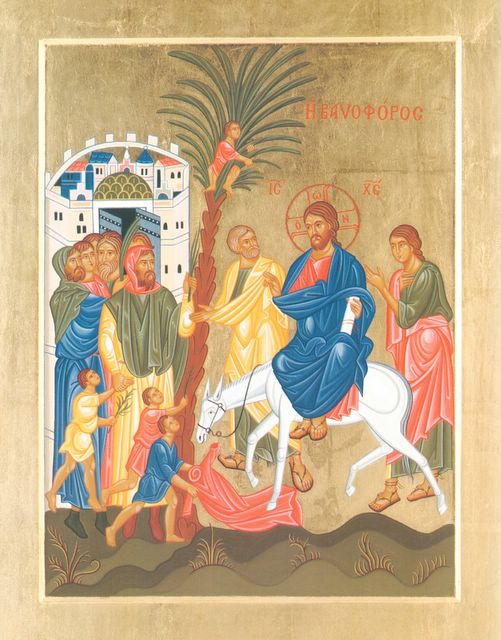
3) There is much to be learned from other Christian traditions outside of conventional evangelicalism about worship. As we begin to identify ourselves simply as believers rather by our denominational distinctives I believe we will enter more fully into a true spirit of worship as the united body of Christ. Worship is more than intellectual ascent; it involves the whole person – all five senses, the intellect, the emotions. What can we learn from the more liturgical traditions about the quiet reverence of God? How can the spiritual disciplines of the early church fathers impact my walk with God today? Do icons, candles, and Taize services have a role to play in postmodern worship? I believe they do, right alongside some of the evangelical traditions that we hold so dear.
I recognize that in some respects these points are sweeping generalizations, but this is a new journey for me; somewhat of a personal reformation that I am still working through and expect to do so for a very long time. This is a lifelong journey that will not end on this side of heaven’s door and I have much to learn.
There is so much more I could write but I think I should stop for now. Please leave me comments as I’d welcome dialogue with anyone who is on the same journey.
Saturday, February 26, 2005
Book Review: The Christian Culture Survival Guide
I was expecting a bit of a slapstick look at the evangelical Christian subculture in this book and while it has its humorous points, it really tries too hard to be more of a serious guidebook for negotiating the odd, sometimes bizarre subculture of evangelicalism. Unfortunately, this is where the The Christian Culture Survival Guide breaks down. An amusing 'insider' look at the subculture would provide endless comedic fodder but author Matthew Paul Turner instead has chosen to include serious musings on what true a believer looks like as if he needed to justify the funny bits. That’s too bad because there are an endless number of books like that already. In the end, the author and the book end up becoming that which they are mocking. YY
Friday, February 25, 2005
Book Review: Transforming Bible Study
I picked up Bob Grahmann's book 'Transforming Bible Study' expecting to give it a quick skim before starting a small group Bible study on Romans. Little did I know I'd be reading it cover to cover. I don't think I'm exaggerating when I say that this is the best book on how to do Bible study that I've ever read. It is not a "how to lead a Bible study in three easy steps" kind of book; it really digs into how I as an individual do a study that can then be applied in a group setting using the same principles. As someone who's been leading Bible studies and in some form of leadership role for about 20 years, Grahmann's book has really made me rethink what it is that I call Bible study versus what is truly a transforming experience in God's Word. Highly recommended! YYYYY
Subscribe to:
Posts (Atom)